The Life of Antoine Bruno
A family searched one hundred and sixty years for a French-Canadian grandfather nobody could find. One document in French — proven by DNA — opened three hundred and fifty years of family history. This is his story, told the way we tell every story: with every claim labeled Documented, Probable, Lead, or Lore.
The full documentary — 18 minutes. Below, the same story as a picture book.
A river with the family's name
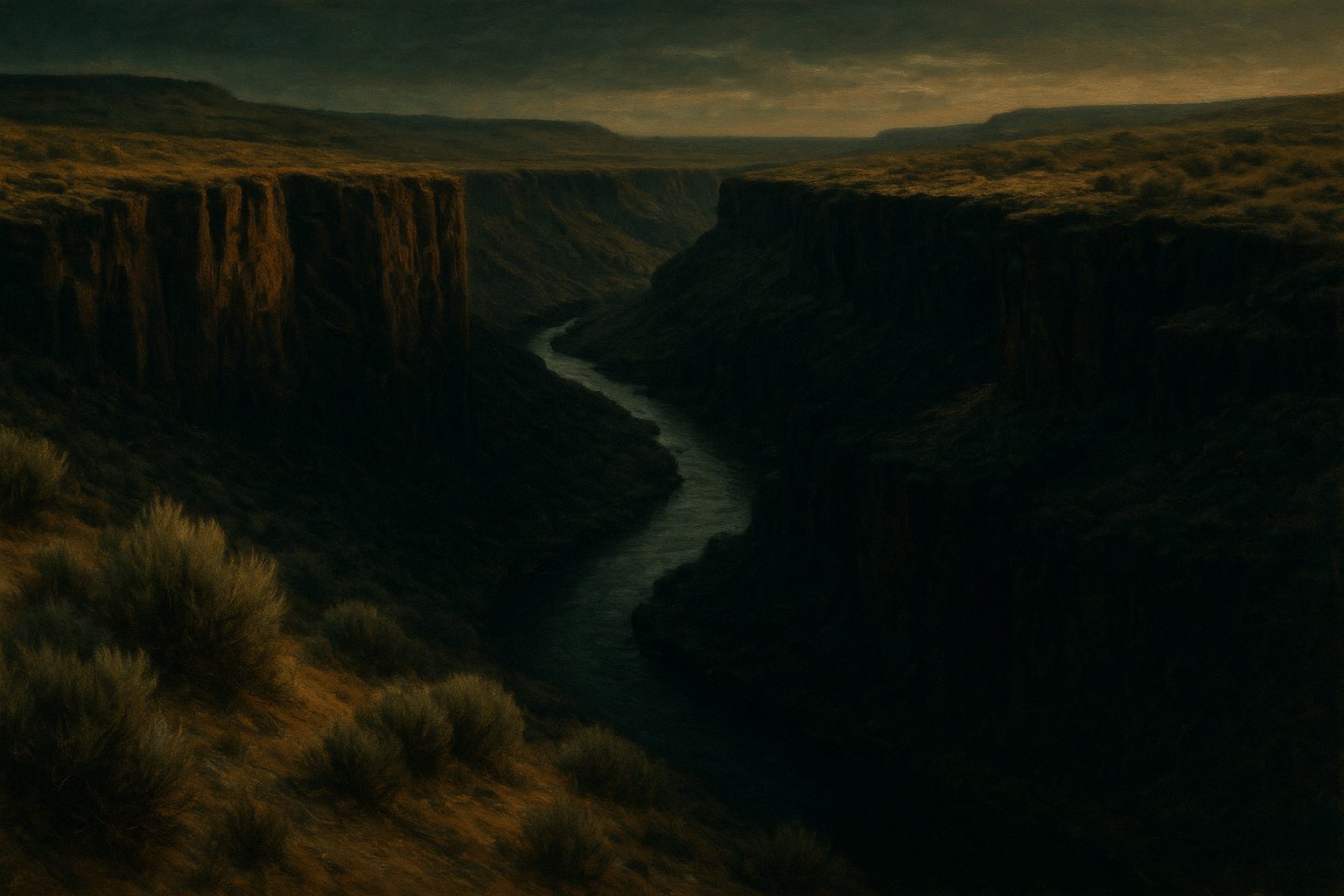
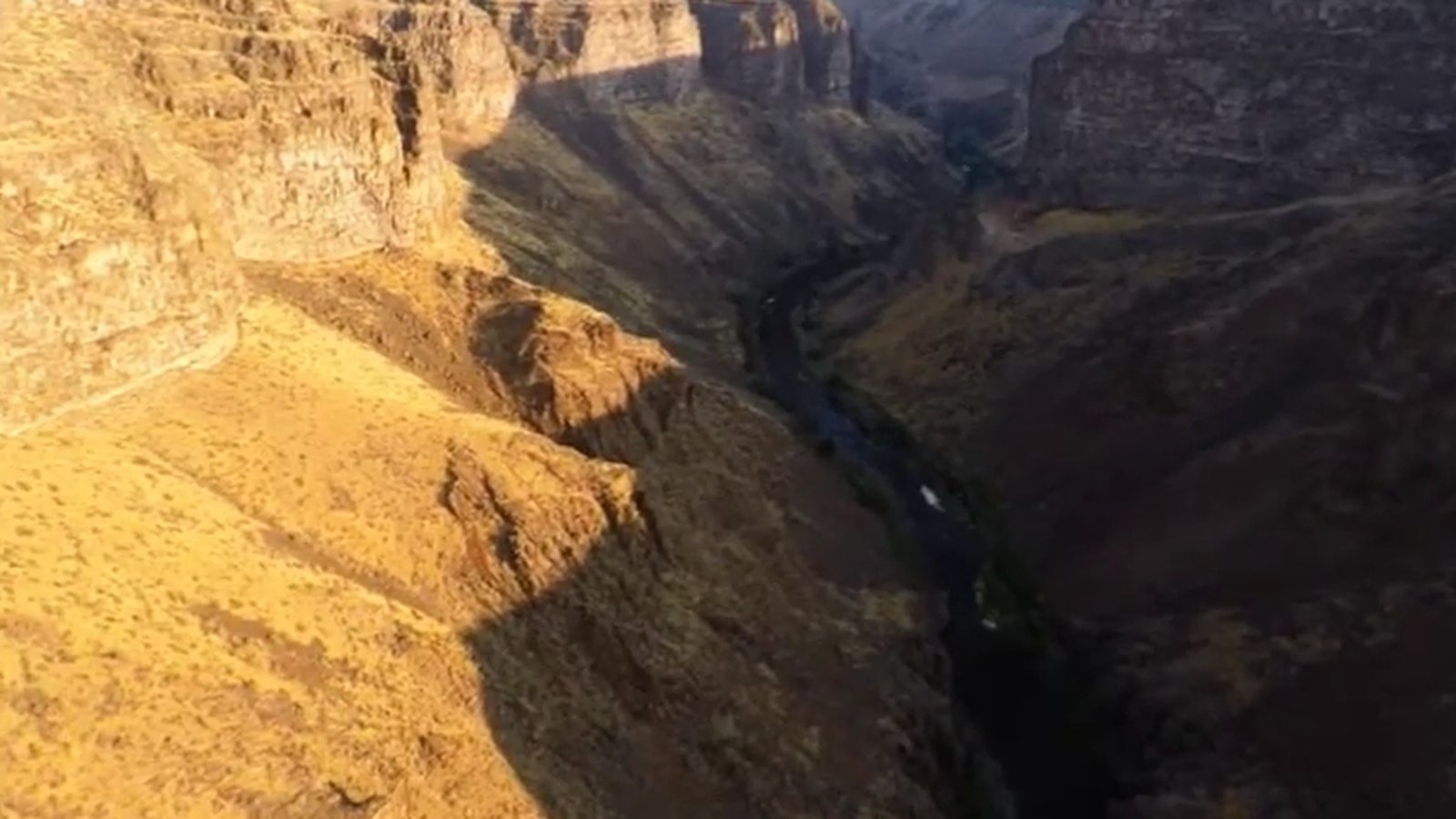
In southern Idaho, a river runs through a black canyon, and it has carried the same name for more than two hundred years: the Bruneau. This is the story of a family who looked at that river and wondered — and of the man they searched one hundred and sixty years to find.
One document in French
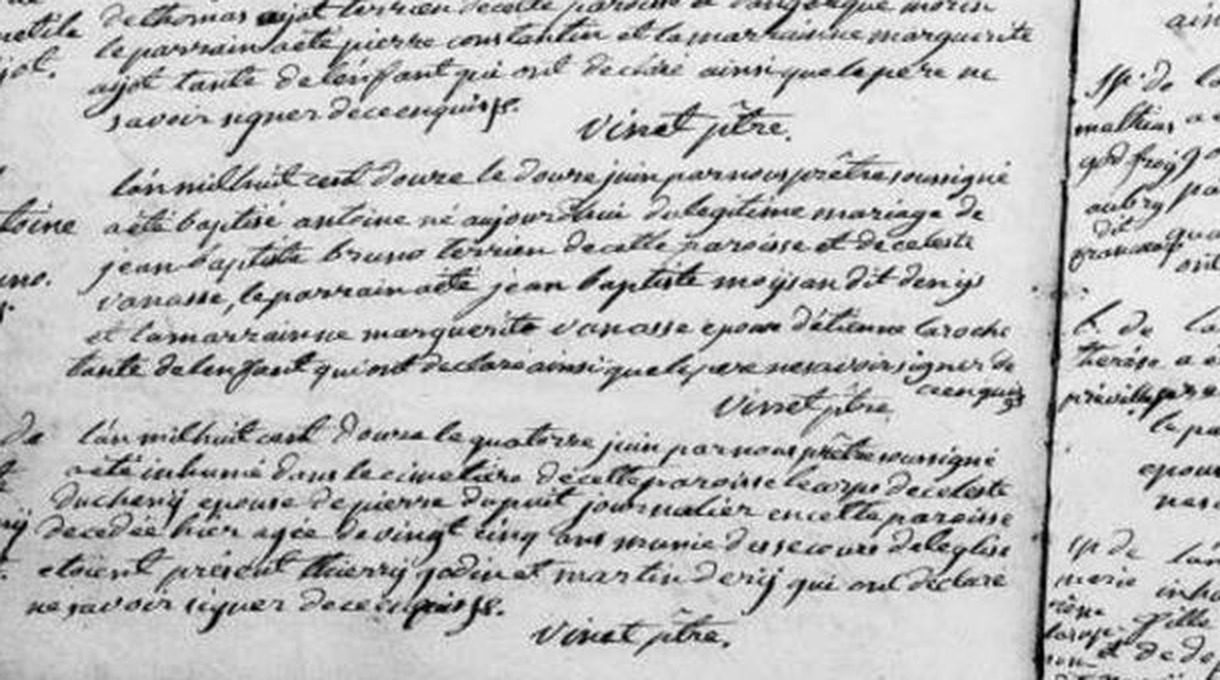
For almost sixty years the family searched for a grandfather nobody could find. In 2026, DNA finally pointed at one parish — and in a register written more than two hundred years ago, there he was. Baptized the twelfth of June, 1812, at Maskinongé, Lower Canada: Antoine, son of Jean-Baptiste Bruneau and Céleste Vanasse.
The boy from Maskinongé
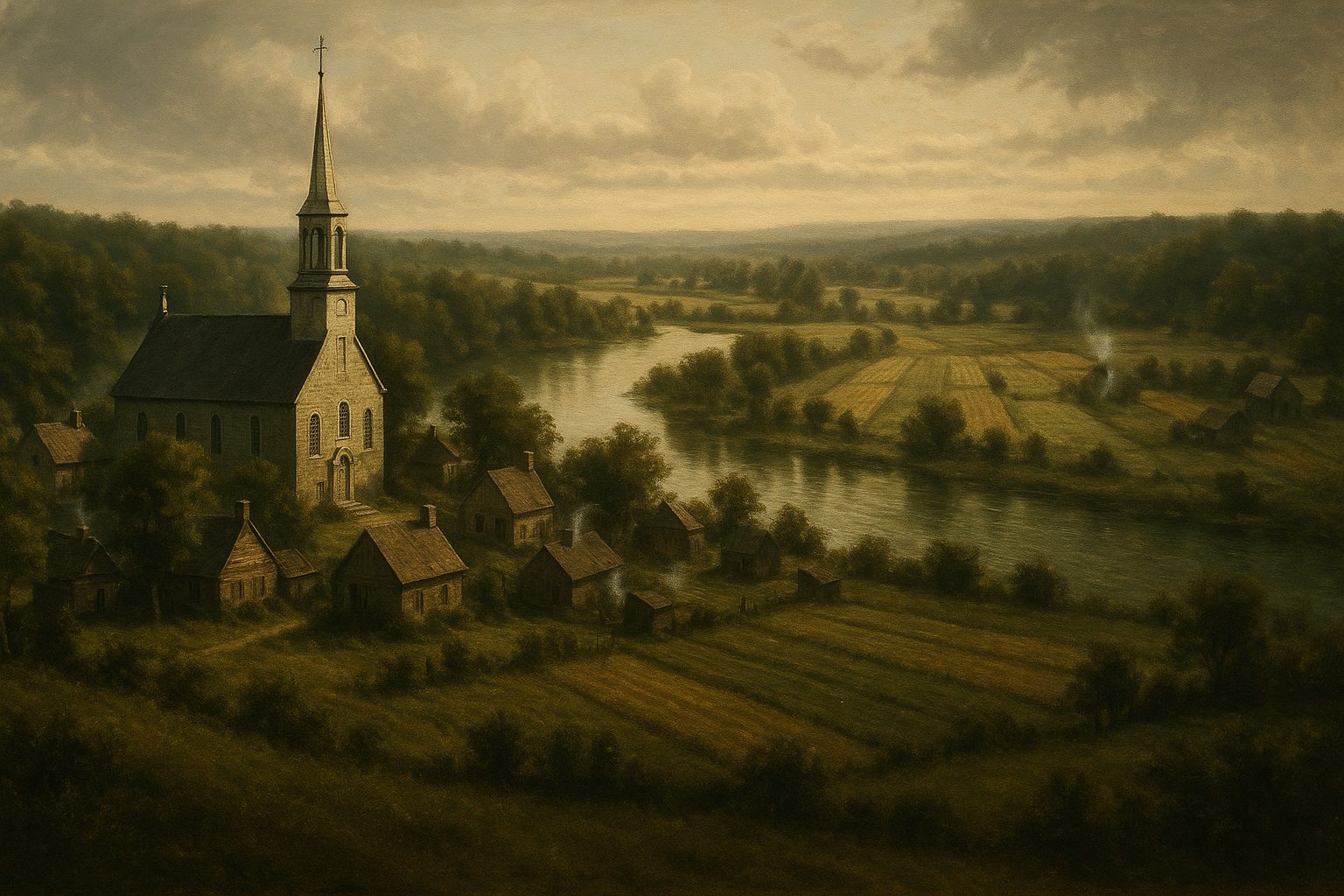
He was born into the Petit dit Bruneau family — habitant farmers on the Maskinongé, with names that go back to the first boats from France in the sixteen hundreds. Sometime in his youth, Antoine left. Quebec's registers go silent on him — and the fur country took him.

A compass with a bent needle
Family memory placed his birth in France, around 1815. The records say Lower Canada, 1812. Both can be true in spirit: to his Iowa grandchildren, a French-speaking father from a French parish was simply from France. The lore wasn't a lie. It was a compass with a bent needle — still pointing, roughly, home.
The eldest son got the farm
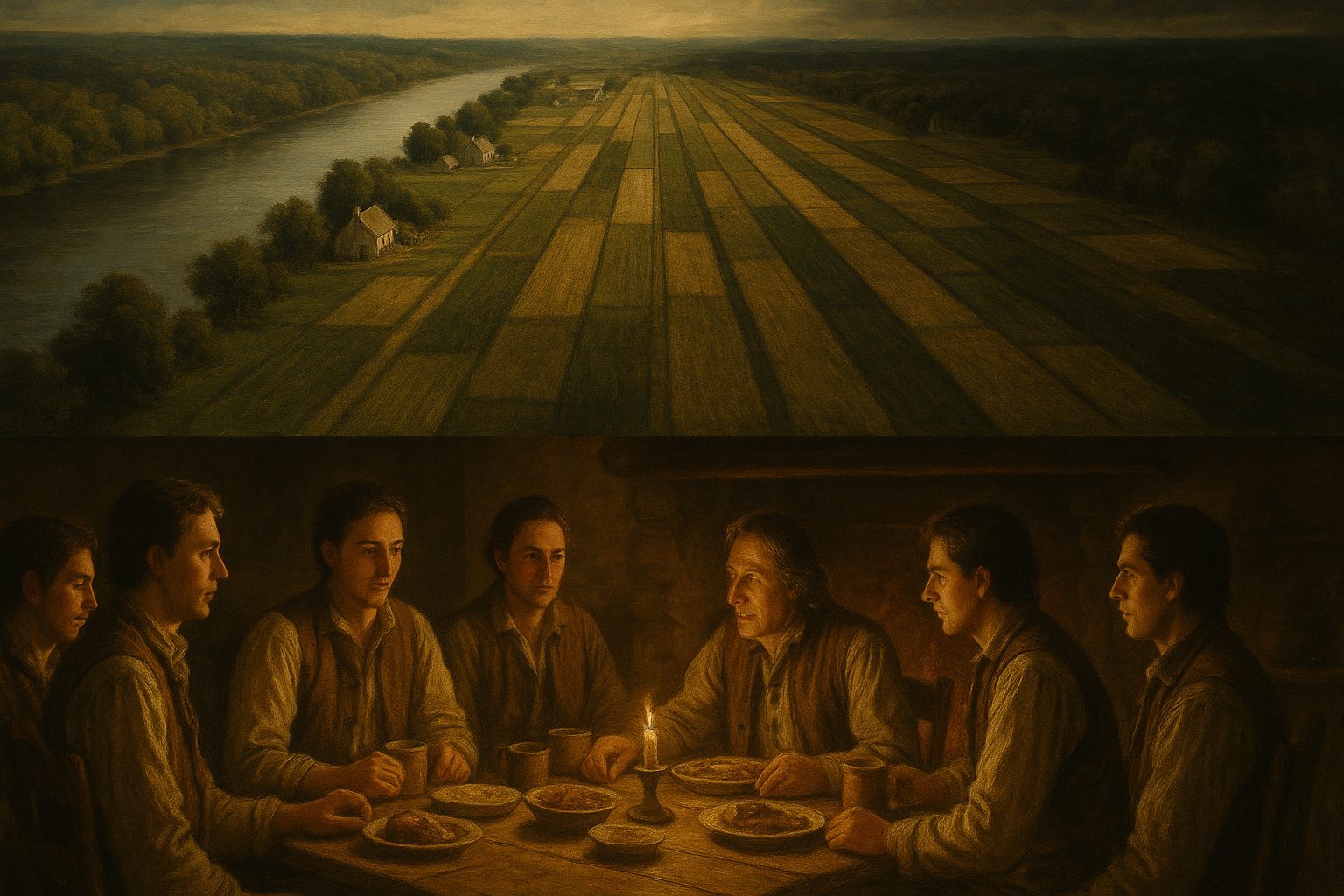
Maskinongé was voyageur country — the great recruiting ground of the fur trade. On the seigneurial farms the land was fixed and the families were enormous. The eldest son got the farm. The younger sons got a paddle.
South, to the Americans
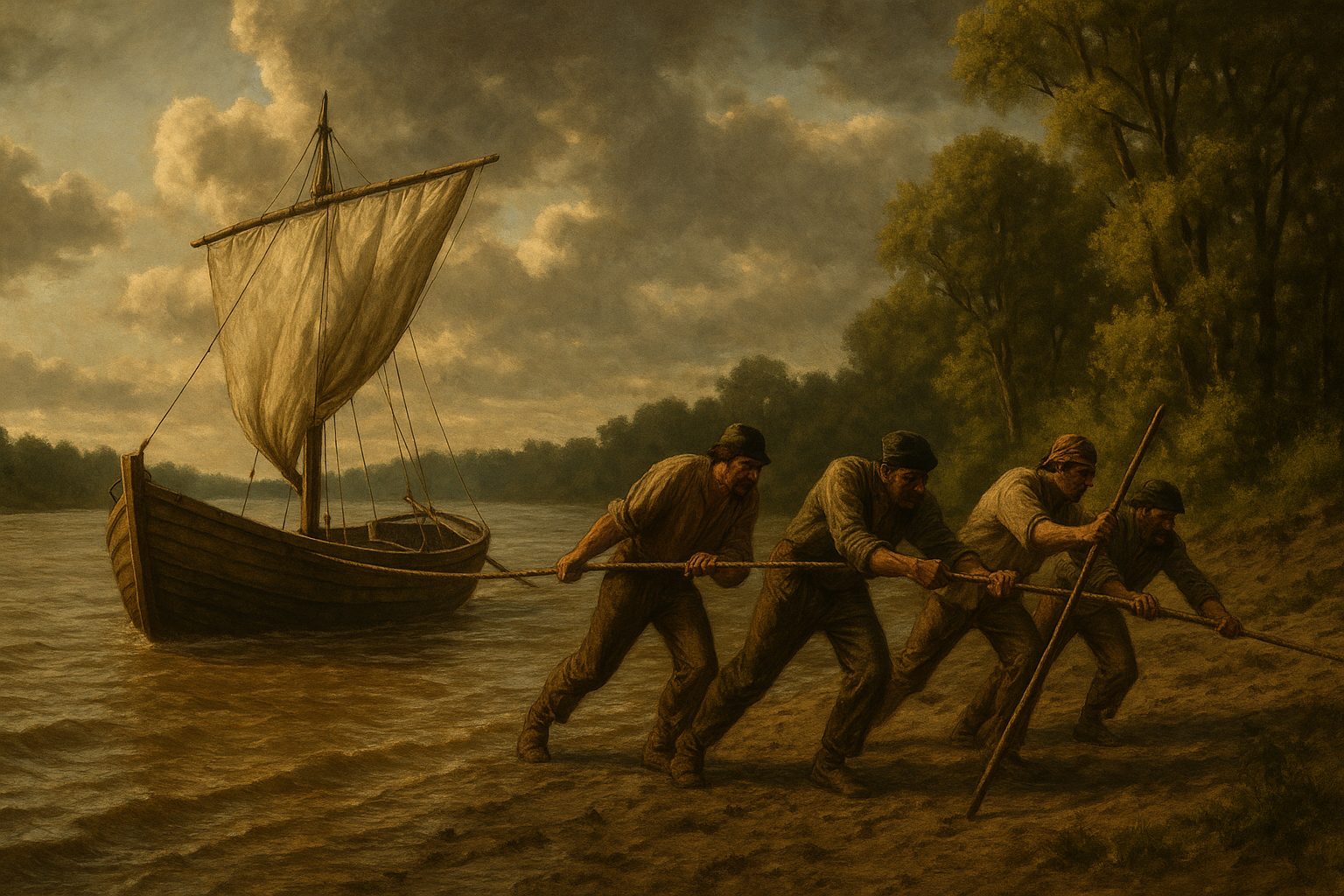
In 1821 the North West Company was swallowed by its rival, and hundreds of French-Canadian voyageurs were thrown out of work. Where did they go? South — to the American fur companies on the Missouri, whose rosters read like a Quebec parish register. Antoine came of age in exactly those years.
Julia
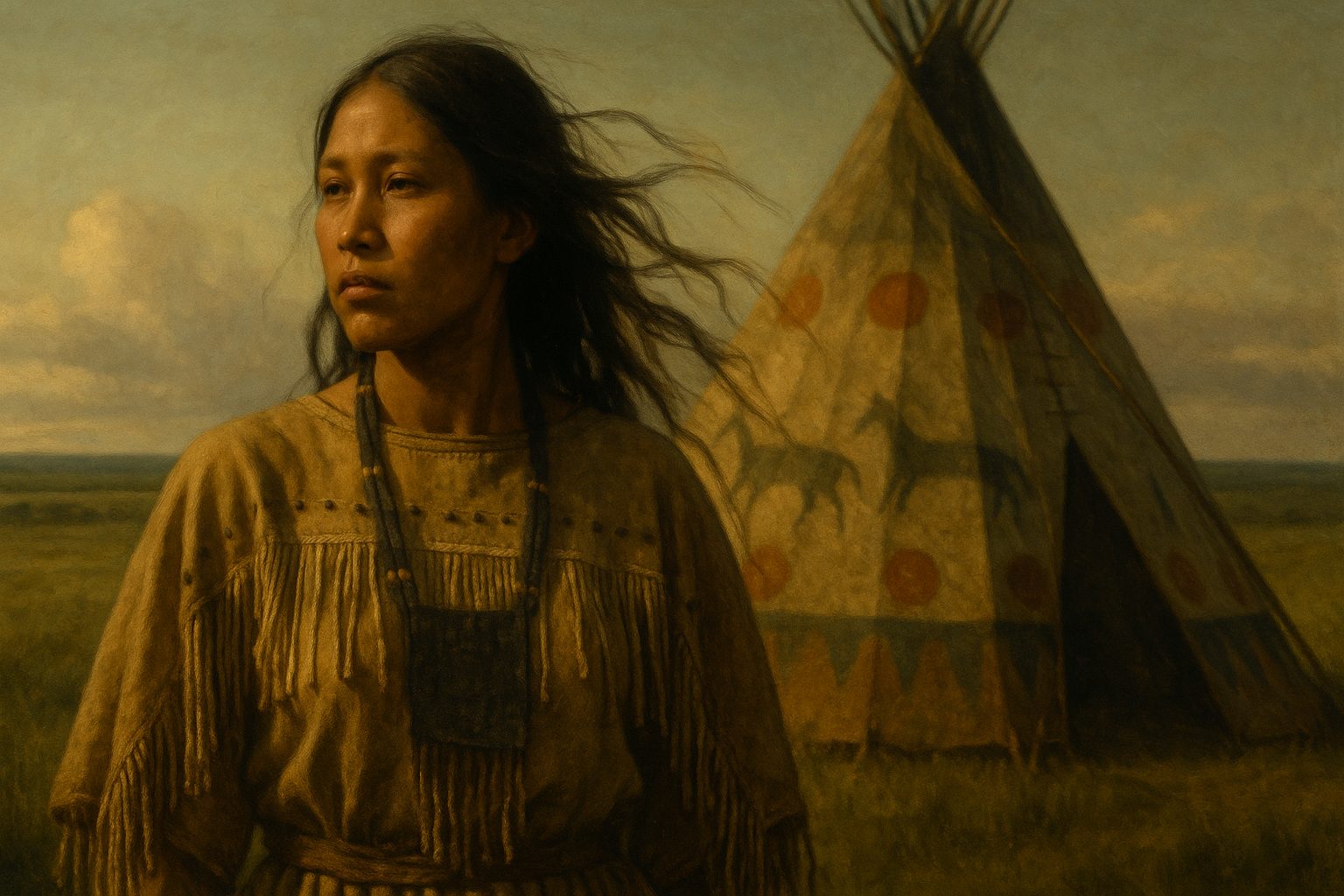
Somewhere in the Blackfoot country of the upper Missouri, Antoine took a wife. Her name comes down as Julia — a Blackfeet woman. Her descendants were still telling it generations later: a French-Canadian trapper with a Blackfoot wife is not a strange family rumor. It is the signature of that exact trade, in that exact decade.
The proof in a church book
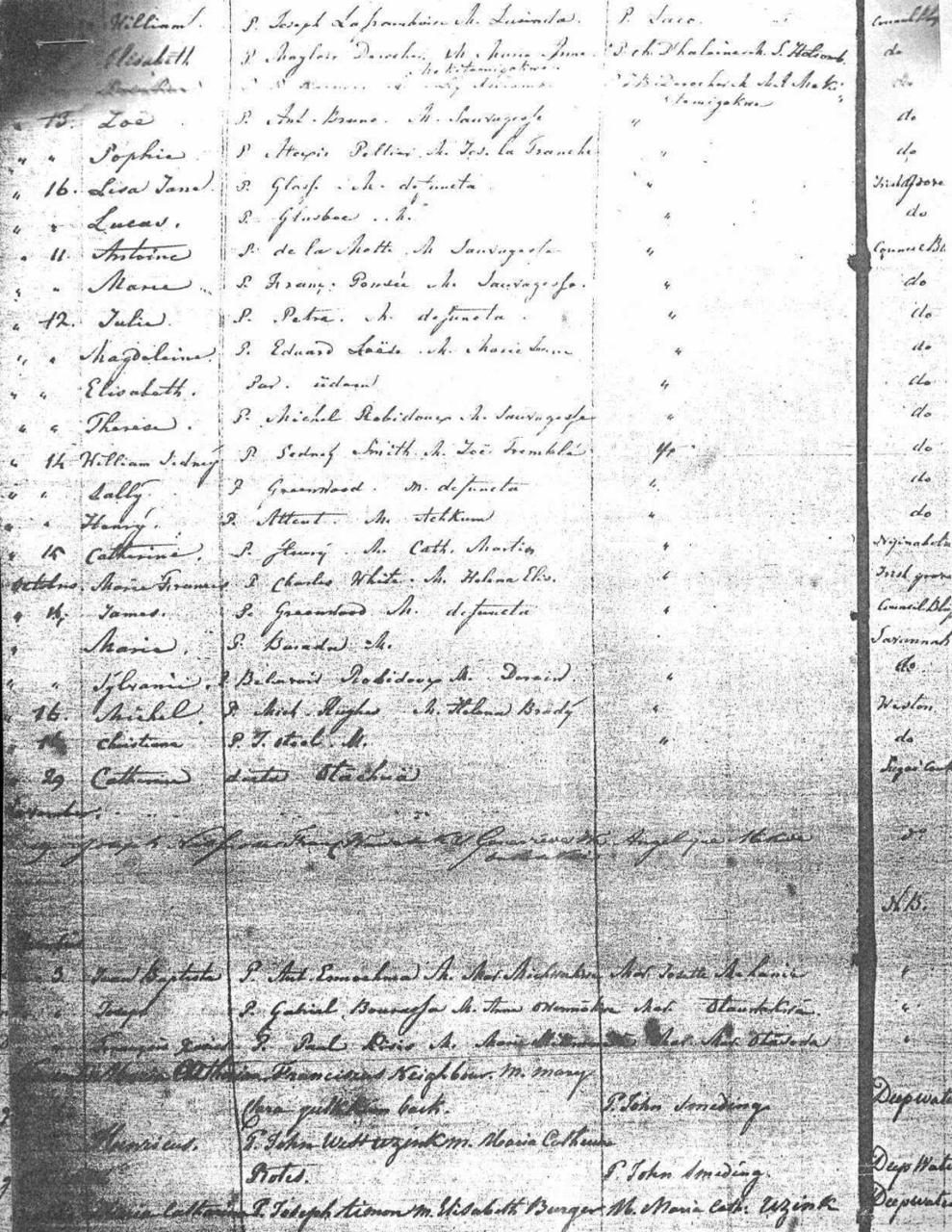
By 1840 Antoine was at Council Bluffs on the Missouri, and the mission's baptismal registers hold the family's proof. His son's entry names the mother "pied-noir" — Blackfoot. His daughter's entry: "Père — Antoine Bruno. Mère — Sauvagesse." A trapper, his Blackfoot wife, and their children, written into a Jesuit register.
French Village, Iowa
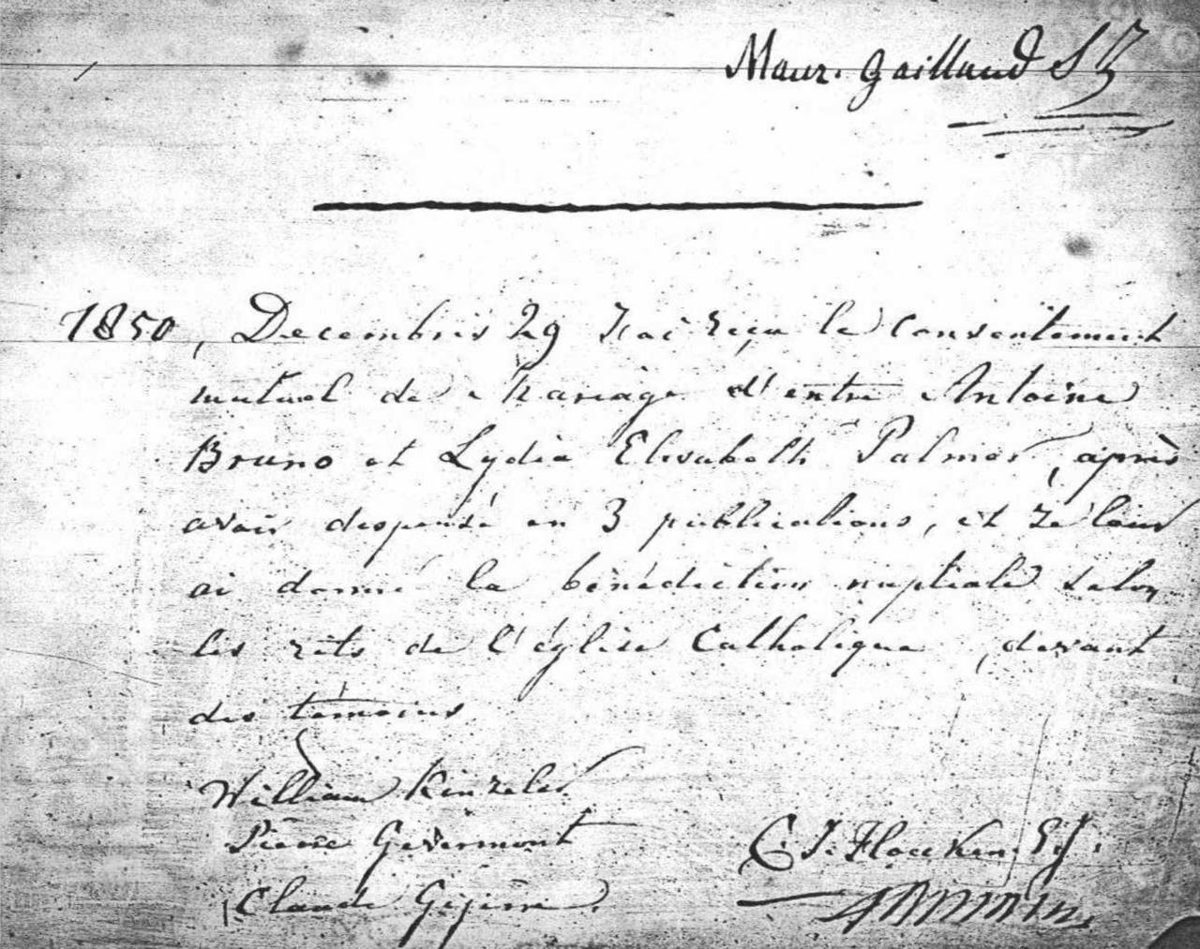
In 1849 Antoine came to rest at last, among the first settlers of a French-speaking settlement in Fremont County, Iowa. And on the twenty-ninth of December, 1850, the same Jesuit circuit that had baptized his children married him to Lydia Elizabeth Palmer. That single page welds the mission world to the Iowa world. The same man.
Citizen of the grove
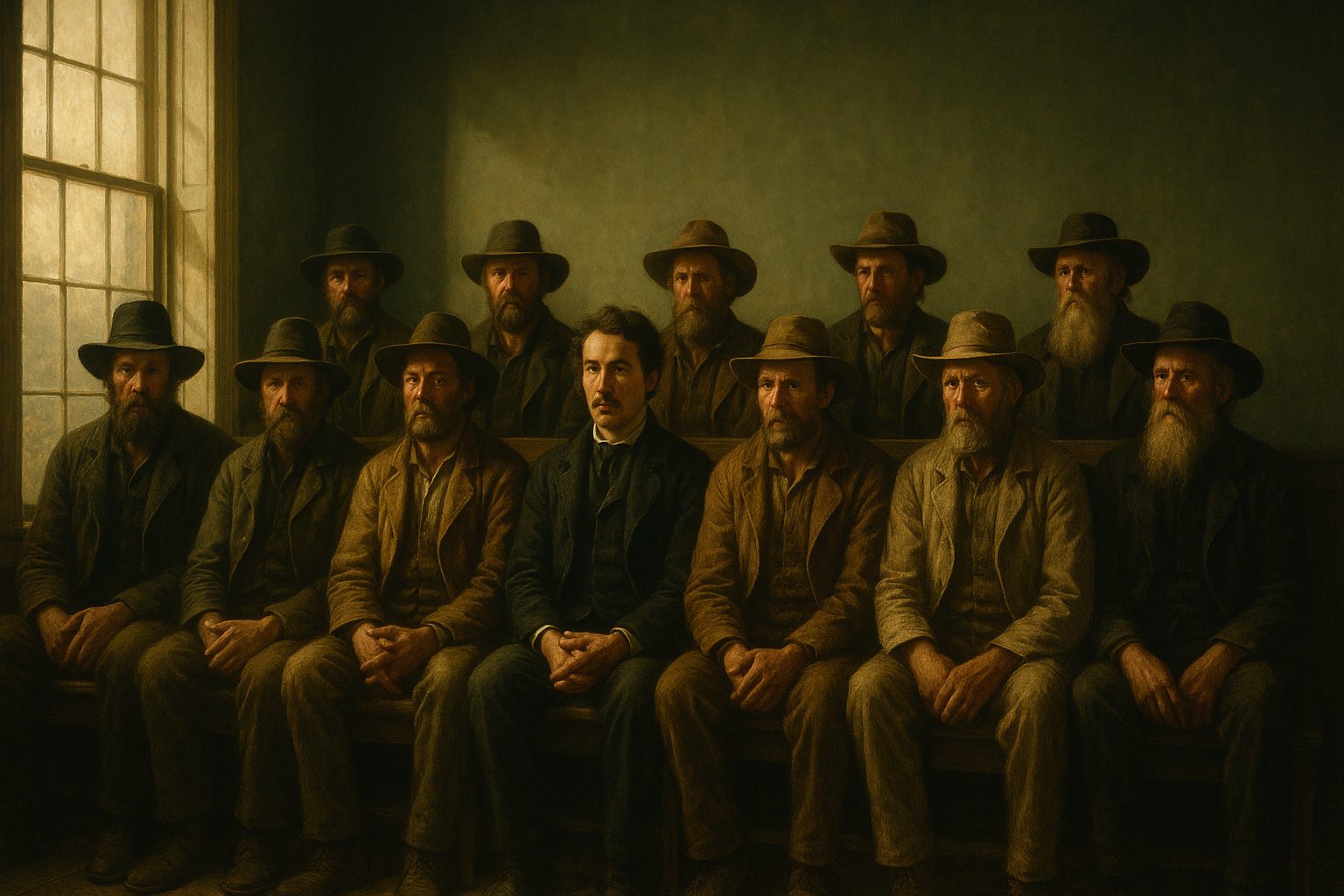
The 1850s made him respectable, Iowa-style. 1851: seated on the Fremont County grand jury — a Quebec trapper, now trusted to judge his neighbors. 1854: eighty acres, patented under a War of 1812 bounty-land warrant. The censuses find him: farmer, born Lower Canada, the house crowded with children.
Anthony. Antony. Antoine. Anton.
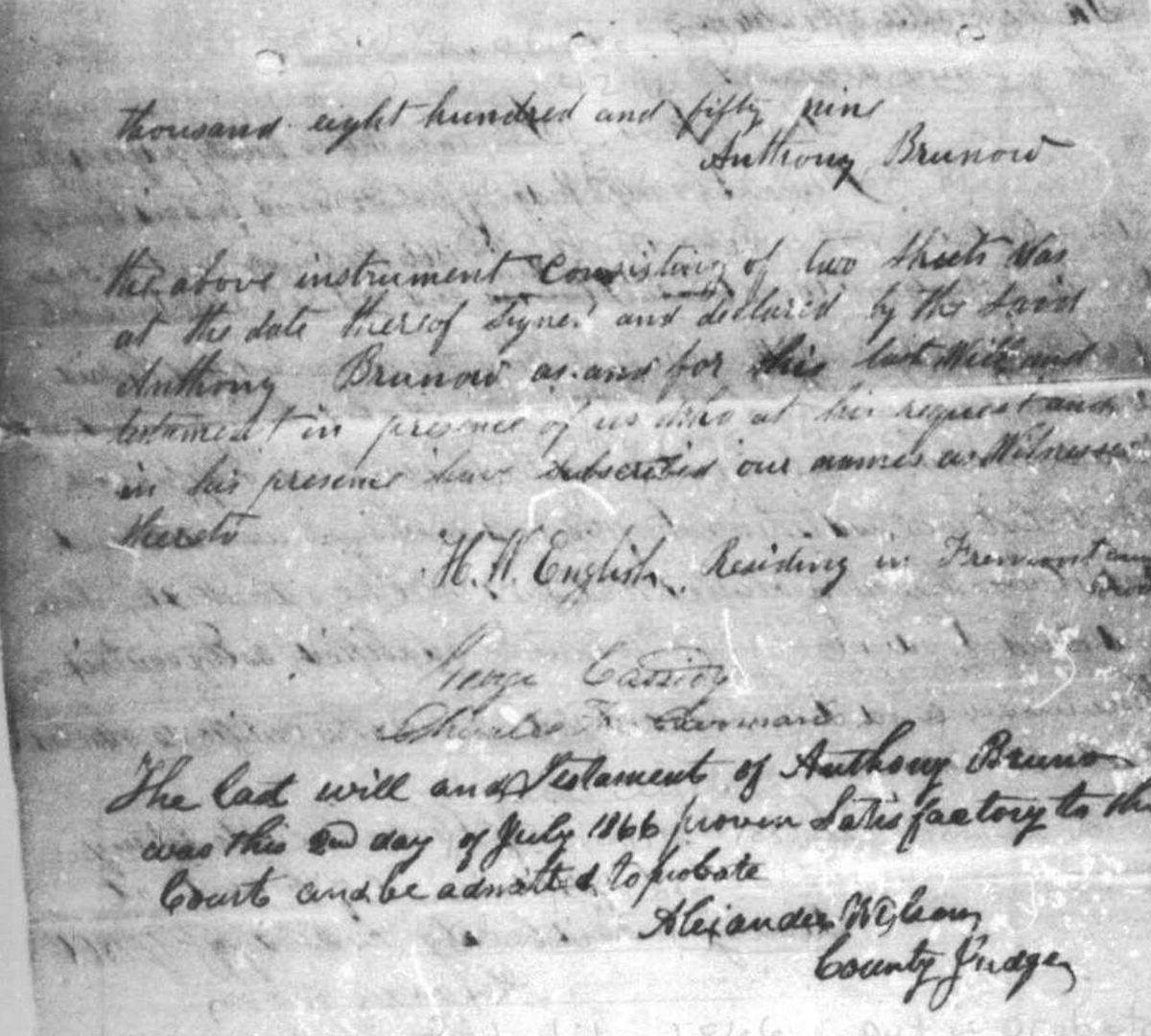
He signed his name "Anthony Brunow" — a Frenchman's hand wrestling an English spelling. The records call him all of these, and he answered to all of them. He made his will four days before he died.
May 1866
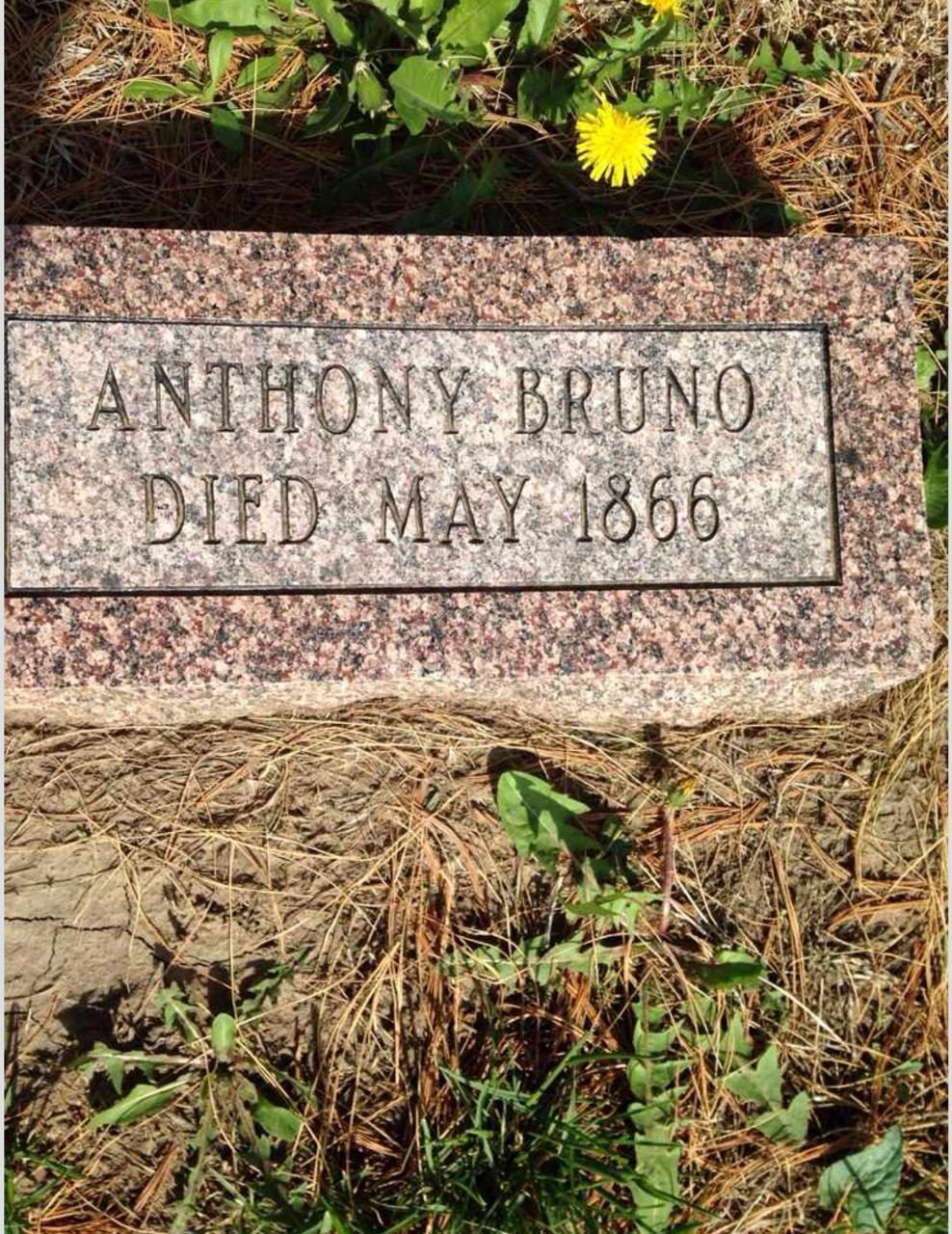
Anthony Bruno died on the eighteenth of May, 1866, at McKissick's Grove, about fifty-three years old. He had crossed a continent, buried a wife, and raised two families. The family tells the truth about his death and does not sensationalize it. His stone — pink granite, still standing — says the rest without a word.
The widow's fight
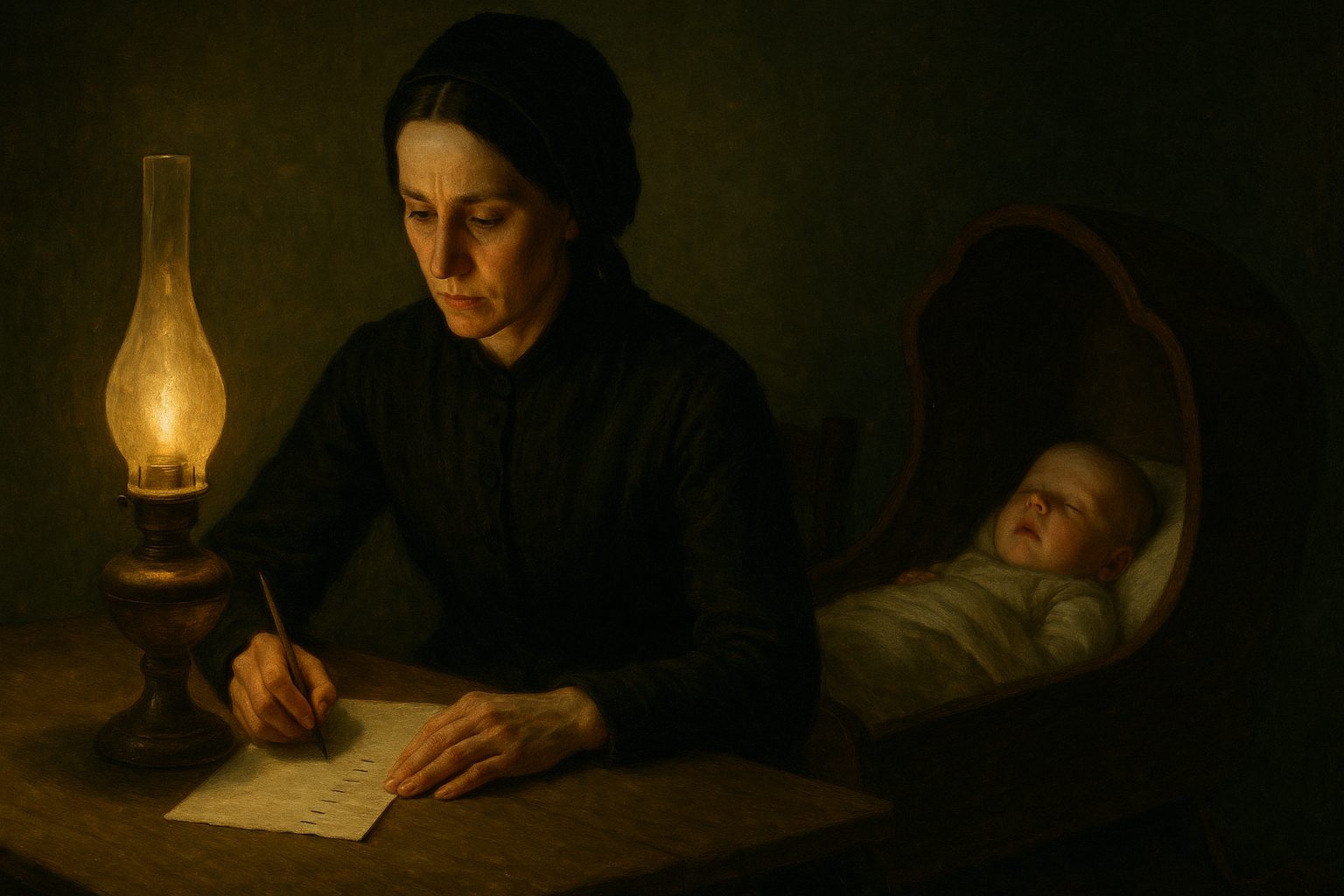
Lydia was left with eleven children, the youngest still in arms. The probate file is her monument: every child listed with their ages, the notices served, the widow's third secured — a widow running a probate like a business, because it was the only business standing between her children and nothing.
West again
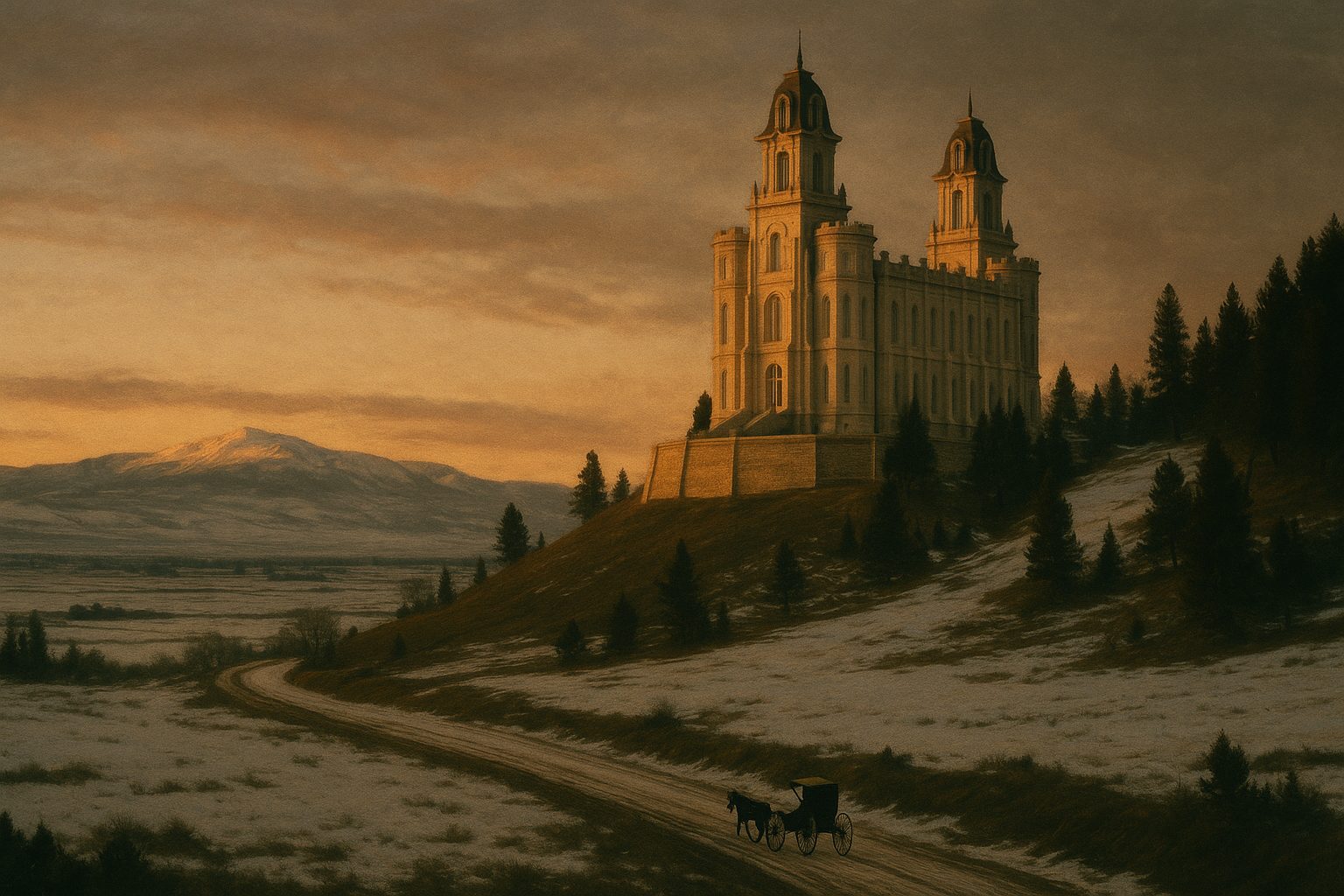
Then the family did what Antoine had always done: they went west. By 1870, Lydia and the children were in Spring City, Utah. In 1917 and 1918, his grandchildren took his name into the Manti Temple. And in 2011 he was sealed to Julia — the family's faith kept claiming him, and her, and them.
The river
The Bruneau was named before 1821, the historians say, for a French-Canadian fur trapper. Our Antoine was a French-Canadian fur man of exactly that world. Whether the river carries a cousin's name or a stranger's, the question is honest — and it stays marked unproven until the records say otherwise.
The line of the searchers
Isaac Bruno — the son who told — made sure his grandchildren knew the family's story. After him came the letter-writers, the family historians, and the cousins who guarded the record. The breakthrough of 2026 was not a lucky click. It was six generations of stubborn people, handing a question forward.
One document, 350 years
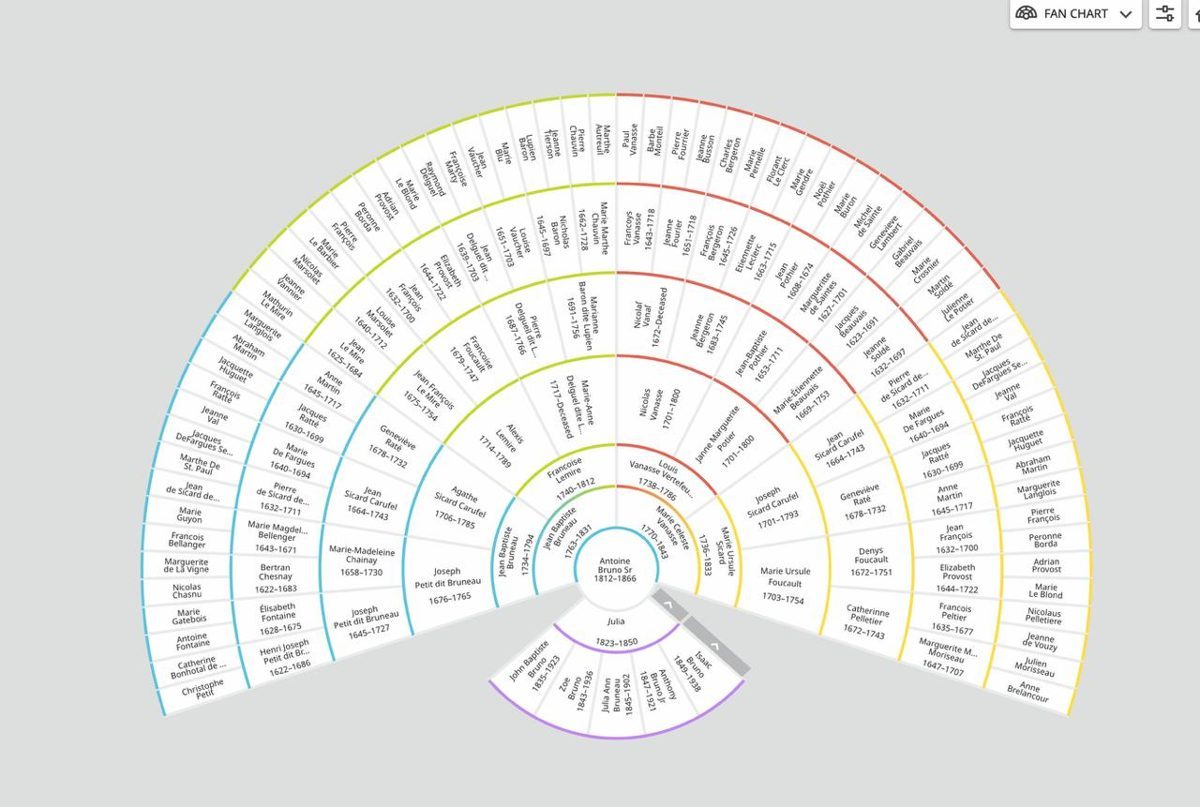
That one register entry fanned the family tree out almost three hundred and fifty years — from the first boats out of France, through the fur country and the frontier, to a family spread across Utah, Idaho, and beyond. He was found because his family refused, for one hundred and sixty years, to stop looking.
He was found because his family refused,
for one hundred and sixty years, to stop looking.
Whose story is waiting in your line?
This story began with a single name and a $250 Line Snapshot's worth of questions. Yours can too.
Begin Your Journey